 English
 中文
 Español
 Deutsch
 Nederlands
 Français
 Русский
 Italiano
 Português
 日本語
 한국어
 العربية
 हिन्दी

Describe the specific quality issue, agree how it will be assessed and document the proposed correction before approving the next step.
The sample arrives and something feels wrong. The finish looks uneven, the lid does not sit as expected or the packaging seems too light. Telling the supplier to “improve the quality” expresses dissatisfaction, but it leaves the proposed correction open to interpretation.
Start by identifying the specific characteristic and the reference you are comparing it with. That gives the supplier a problem it can investigate and gives you a way to assess the next proposal.
Describe the observation before proposing the fix
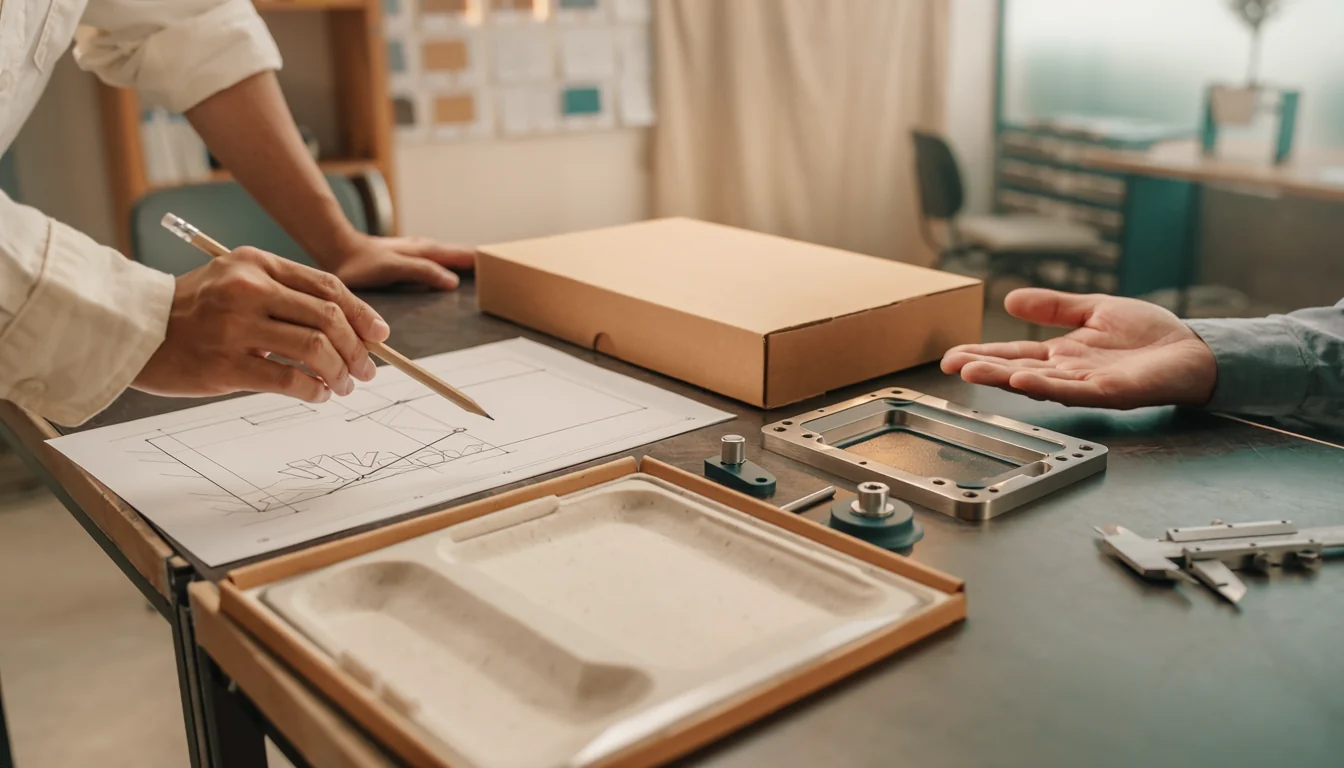
Use numbered photos, the physical sample and the current drawing to show what you mean. Record where the issue appears and under what circumstances. Separate what you observed from what you think caused it.
For example, “The lid catches at this corner when closed” is an observation. “The mould must be wrong” is a proposed explanation that may need technical assessment. Asking the supplier to explain the cause gives you a stronger basis for discussing the remedy.
For technical or safety-related characteristics, involve an appropriate product specialist. A supplier meeting can gather information and discuss options, but it should not replace the assessment your product requires.
Make quality specific enough to discuss
Break the product into the characteristics that matter: dimensions, materials, appearance, function, assembly, packaging and relevant performance requirements. Do not assume every characteristic can be accepted by looking at a photograph or handling one sample.
Agree the reference and the method used to assess each important point. Where tolerances, test conditions or acceptance criteria are needed, have the responsible technical people define them. Avoid copying arbitrary numbers from another product merely to make the specification look complete.
| Broad comment | More useful discussion |
|---|---|
| The colour is wrong | Which approved colour reference applies, under what agreed viewing or measurement conditions? |
| The lid feels poor | Which part of the closing action is unacceptable, and how should the intended function be assessed? |
| The box is too weak | What handling and protection requirements must the packaging meet, and what assessment is appropriate? |
| The finish needs improving | Which visible defects are present, where, and what reference will be used to judge the revised result? |
Understand the production proposal
Ask what the supplier proposes to change and why. A different material, process or component may solve one problem while affecting appearance, cost or another requirement. Review the whole proposed change rather than approving a label such as “upgraded material.”
Ask whether the revised sample will use the intended production materials and process. If it differs, document the limitations of what that sample can demonstrate. A carefully finished sample may answer an appearance question without establishing how an entire production run will perform.
Also discuss how the supplier intends to monitor the important characteristics during production and how exceptions will be reported. Request the information needed for your own quality plan; specialist inspection or testing should have its own defined scope.
Work through one issue completely
Suppose a storage box lid does not close consistently. Begin with the sample reference, drawing version and a demonstration of the issue. Ask the supplier to explain its investigation and proposed correction.
Then establish which dimensions, components or materials would change, whether price or timing is affected and what the next sample will demonstrate. Agree who will review the result and what evidence they need. Keep production approval separate until the required review has been completed.
Record the action in a useful form: “Supplier to propose a documented correction for the lid-closing issue on sample S2, including affected specification references and the next-sample plan.” Add an owner and target date. That is a manageable action; “supplier to improve quality” is not.
Close the language gap with shared references
Give your interpreter the photos, relevant terms and current specification before the meeting. During the discussion, keep the same sample or image visible to everyone. Have numbers, units and proposed changes confirmed explicitly.
Finish by distinguishing agreed requirements, proposed solutions and unresolved questions. Send the written recap for correction and keep it with the current product documents. Share your sample-review agenda with TalkEast to arrange interpreting for a precise discussion of the product and next steps.