 English
 中文
 Español
 Deutsch
 Nederlands
 Français
 Русский
 Italiano
 Português
 日本語
 한국어
 العربية
 हिन्दी
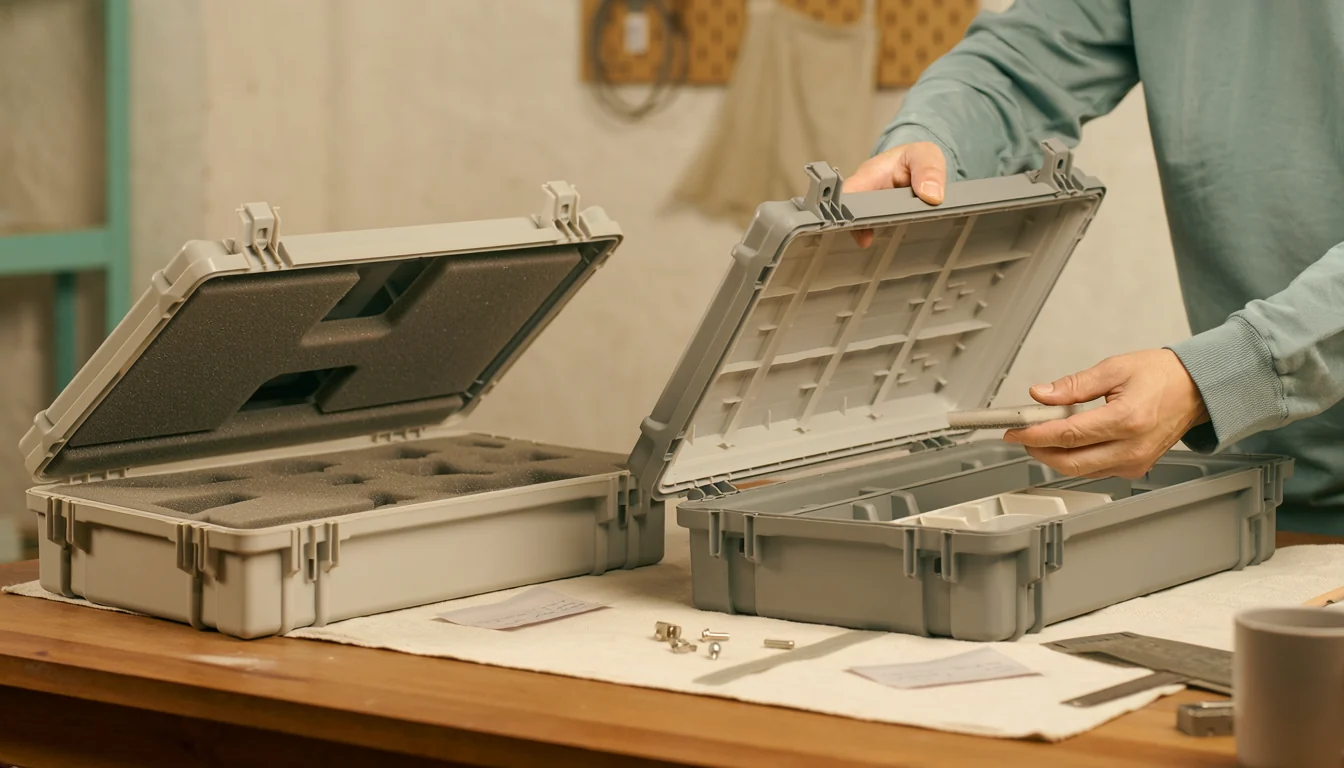
Reconcile specifications, variants, packing and one-time charges before interpreting a price gap.
Two suppliers can quote the “same” product and still be pricing different work. One interprets your photograph as a standard catalogue item. Another assumes a custom version with thicker material. Both use the name from your enquiry, so the difference is easy to miss.
Large price gaps deserve investigation rather than an immediate conclusion about either supplier. Ask what each number includes, which assumptions were made and what evidence would confirm the proposed construction.
The specification may be less settled than it appears
Images leave room for interpretation. Material grade, wall thickness, component quality, surface finish and assembly method may be difficult to identify from appearance alone. Even a written brief can leave gaps if it uses phrases such as “premium material” or “strong packaging” without defining them.
Ask each supplier to return its proposed specification with the quotation. Compare it line by line against your current brief. Where a supplier offers an alternative, keep the alternative in a separate column instead of silently replacing your requirement.
If a product has a performance requirement, price comparisons should reflect the same requirement and evidence. A claim in a message is not equivalent to a confirmed test result for the proposed product. Arrange appropriate technical review where the application requires it.
Quantity means more than the order total
An order for 3,000 identical items differs from 3,000 items split across six colours and several sizes. Ask whether the price assumes a production batch per variant and whether materials, printing or components have their own minimums.
Compare the actual mix you intend to buy. A supplier quoting one colour at a higher quantity has not necessarily found a cheaper way to make your planned range. It may simply be pricing a less complex order.
Setup and packing can move costs between columns
Some quotations include setup in the unit price; others show it separately. The same can happen with a logo, printing plate, tool or sample credit. Ask how the first order differs from a repeat order and which charges would recur after a design change.
Packing can create another hidden difference. A retail-ready box, protective insert and printed instructions are a different scope from basic bulk packing. Ask for the packing specification and expected carton information, then compare freight estimates separately if required.
A worked example of a price gap
| Item | Offer A | Offer B |
|---|---|---|
| Quoted unit price | USD 5.00 | USD 4.40 |
| Specified retail packing | Included | USD 0.35 extra per unit |
| Logo setup | Included | USD 200 |
| Comparable subtotal | USD 5,000 | USD 4,950 |
The apparent USD 600 gap becomes USD 50 after those two known differences are aligned. This does not establish that the products are technically identical or either supplier is preferable. It shows why a price needs a defined scope before it becomes a useful comparison.
The commercial boundary may differ
Confirm currency, quotation validity, payment terms and the agreed delivery basis. Establish whether collection, export-related work or other services are included. If different Incoterms rules appear, ask your freight specialist to help put the offers on a common basis.
Lead-time assumptions can also matter. A supplier using available material may quote differently from one proposing a custom purchase. Ask whether the offer depends on current stock or a particular order timing. Record conditions instead of assuming the price will apply indefinitely.
Investigate the remaining difference
Once the product and terms match, a genuine difference may remain. Ask the supplier to explain its proposal without demanding confidential cost details. An existing tool, a suitable production method or a different commercial model may be relevant, but the explanation still needs to fit the product.
Use samples, documented requirements and appropriate supplier checks to assess what the price represents. Do not treat a low price as proof of poor quality or a high price as proof of reliability.
If you need help establishing the likely range before requesting production quotes, send the specification and existing offers to TalkEast's product research service, highlighting the differences you cannot yet explain.