 English
 中文
 Español
 Deutsch
 Nederlands
 Français
 Русский
 Italiano
 Português
 日本語
 한국어
 العربية
 हिन्दी
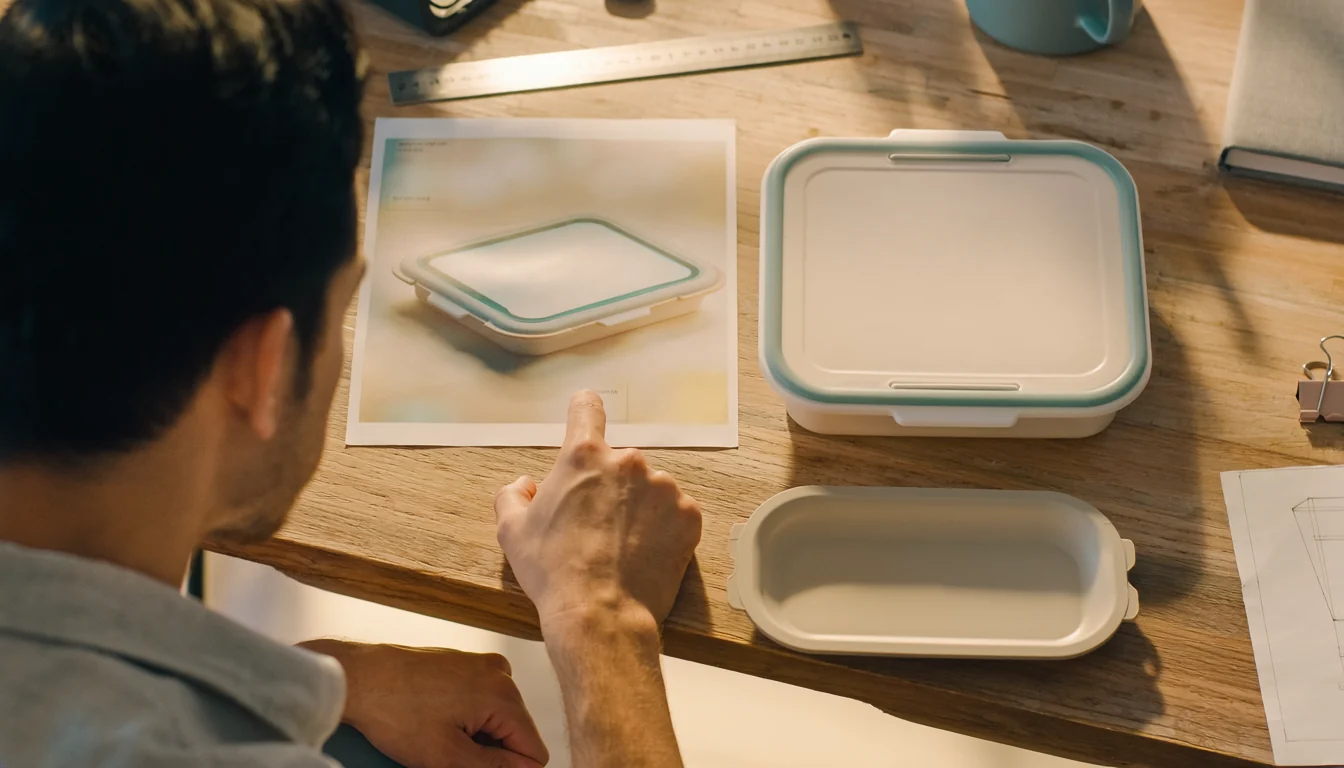
Annotate the photo with dimensions, intended use and known requirements, and ask suppliers to state every remaining assumption.
A product photo shows appearance from one angle. It may conceal the thickness of a wall, the construction of a joint, the material inside a handle or the way an item is packed. Those details can determine which supplier is suitable and what it costs to make the product.
You can begin with a photograph. The next step is to turn it into a brief that distinguishes what you know, what you prefer and what the supplier should help clarify.
Explain what the photograph represents
State whether the image is a reference for appearance, a functional example or an exact design you are authorised to have produced. Identify the features you want to retain and those you intend to change. Do not assume that sending an image communicates the rights or permissions involved.
If several images are attached, explain their relationship. One might show the shape, another the desired finish and a third the packing. Label them separately so a supplier does not combine incompatible details or quote the wrong version.
Add measurements and views
Provide overall dimensions with units and, where relevant, the usable internal dimensions. Include close-ups of joints, closures, edges and other features that matter to function. A simple annotated sketch can be helpful when a photograph makes the geometry unclear.
State which measurements are approximate and which are requirements. If you have a physical sample, explain whether it can be measured or shared through an agreed sample process. Do not ask a supplier to infer precise dimensions from an image containing an unreliable scale reference.
Describe materials and intended use honestly
If the material is known, give the most precise supported description available. If it is unknown, say so and describe the appearance and performance needed. Ask for proposed material options and the basis for choosing them.
Explain how the product will be used, by whom and in which market. Some design choices depend on the loads, repeated actions or environment involved. Where formal safety, testing or market requirements apply, obtain the appropriate professional input and include the actual requirements in the brief.
An example of turning an image into an enquiry
| Image alone leaves this open | Add this information |
|---|---|
| Overall size | Required external and usable compartment dimensions, with units |
| Material | Unknown; supplier to propose options for the stated use |
| Finish | Matte appearance preferred; physical reference to be reviewed |
| Construction | Compartment layout fixed; underside and assembly method open to proposal |
| Branding | One logo in the marked position; artwork supplied separately |
| Order | Initial 1,000 units in two specified colours |
| Packing | Quote plain protective packing and a retail-box option separately |
This brief does not claim to solve every technical detail. It gives the supplier enough context to explain the available routes and identify what must be settled before a reliable quotation can be issued.
State the quantity and degree of customisation
Explain whether an existing model could meet the need or whether the shape must be custom. Ask suppliers to distinguish existing tooling from new development. A visually similar catalogue item may be a useful starting point if the essential dimensions and function fit.
Provide realistic quantities and variant splits. A request for one logo in two colours should not be interpreted as an unspecified number of designs. State packing and labelling expectations, even if the first request asks for options rather than a final design.
Treat the first response as a proposal to check
Ask the supplier to describe the construction and assumptions behind the price. Compare that response with your annotated brief. Where the image does not settle an issue, request clarification before treating the price as firm.
Record the initial figure as an indication if material, process or dimensions remain open. The next step may be a drawing, an existing sample or a development sample. Each should answer a defined question and lead to a revised, more precise brief.
TalkEast's product cost research can start from reference images accompanied by the information above. Send what you know and mark what you do not; that is a stronger enquiry than filling the gaps with guesses.